At the Water's Edge
The Amphibians
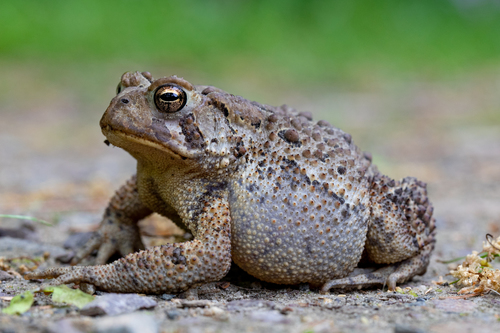
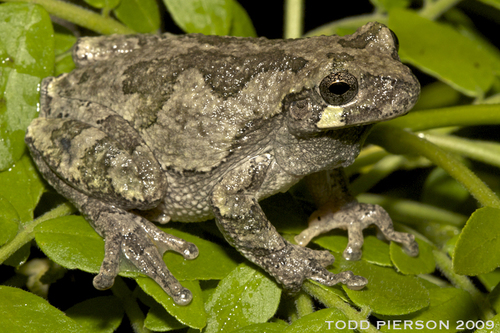
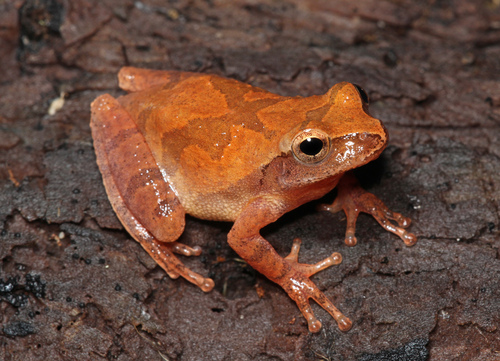
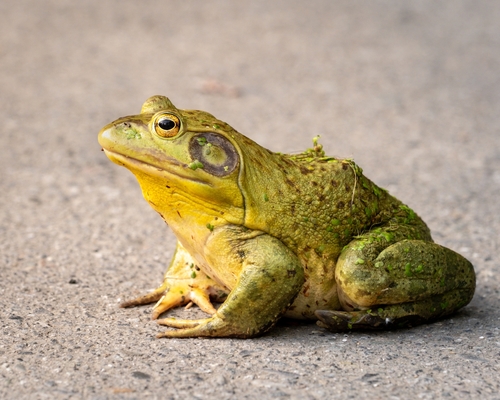
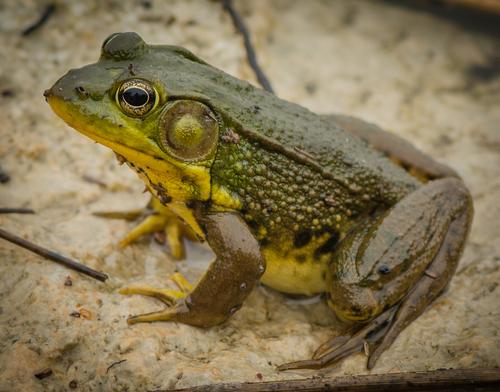
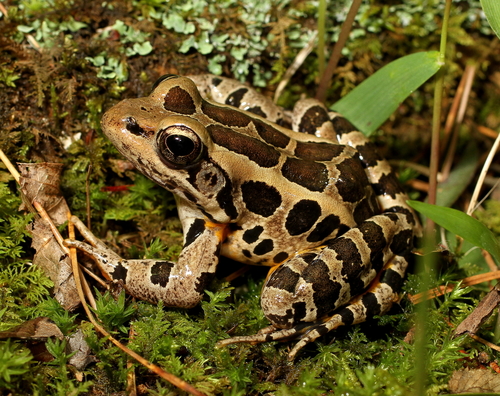
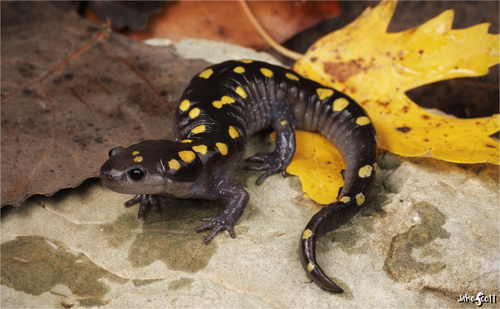
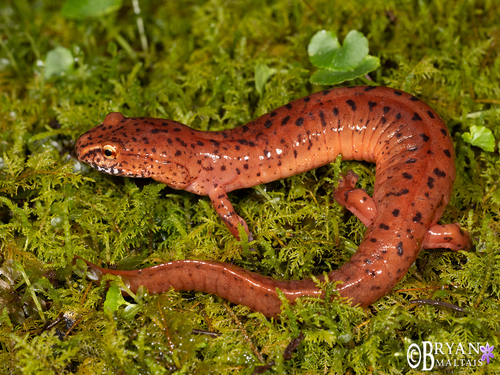
Frogs and salamanders are method- and season-dependent. The current list spans pond, wet-margin, and forest-floor species, but targeted stream and breeding-season surveys remain sparse. The unvouchered Spring Salamander report makes a careful return to the exact cold-water microhabitat especially worthwhile. Cool, damp days favor creek and seep checks, while warm evenings keep frogs visible around the pond and wet margins. Early-spring rainy nights remain essential for migration, choruses, and egg-mass searches.
The 11-species amphibian list is strong for incidental records, and activity continues well beyond the spring chorus. A Spring Salamander was reported on August 16, but the entry has no photograph, audio, or field notes, so it is a documentation lead rather than a confirmed property voucher. It focuses the next search on cold seeps and clean creek runs; a documented repeat would establish occurrence, not by itself breeding or water quality. Two-lined, Allegheny mountain dusky, and northern dusky salamanders remain the clearest gaps in the stream assemblage.
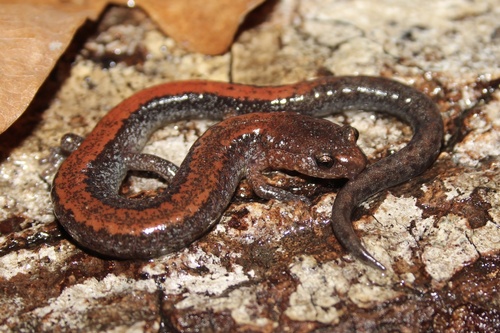
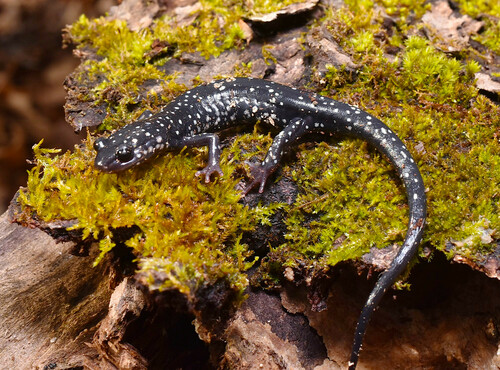
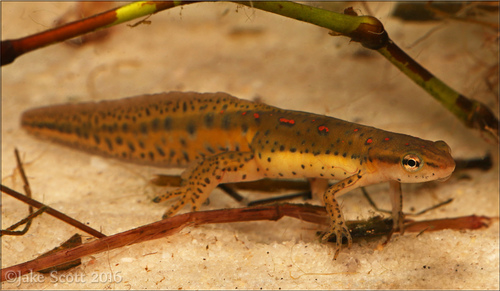
Sun & Scale
The Reptiles
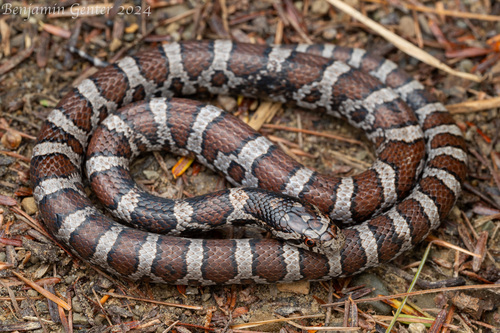
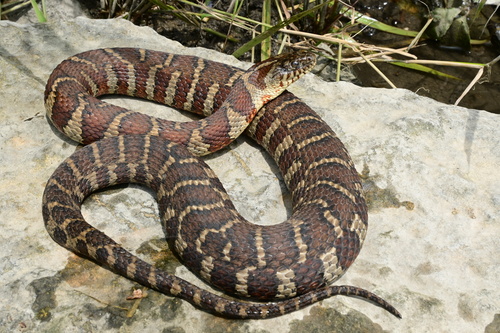
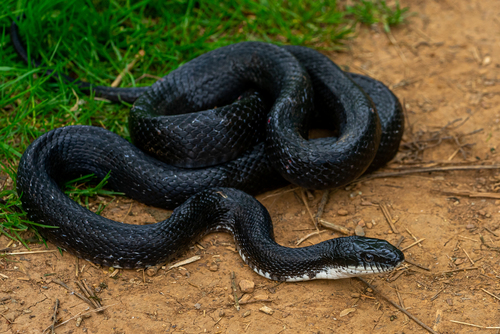
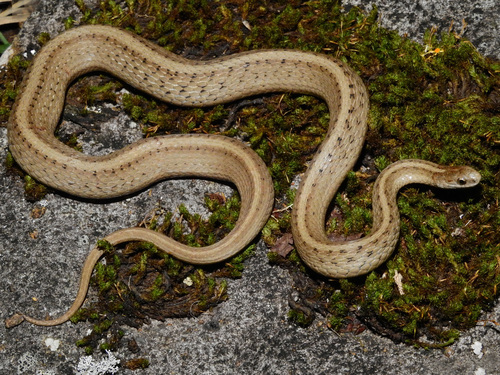
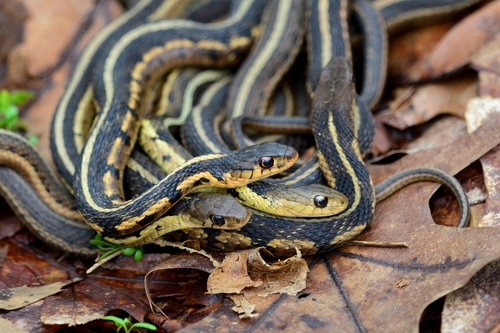
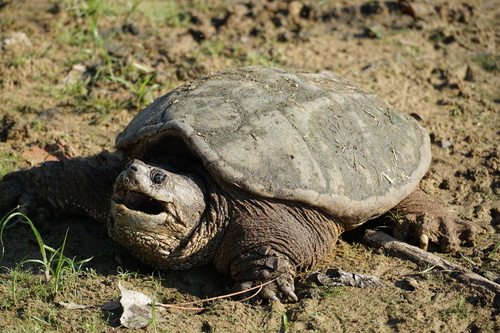
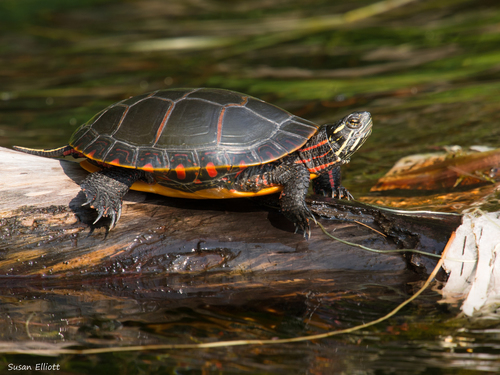
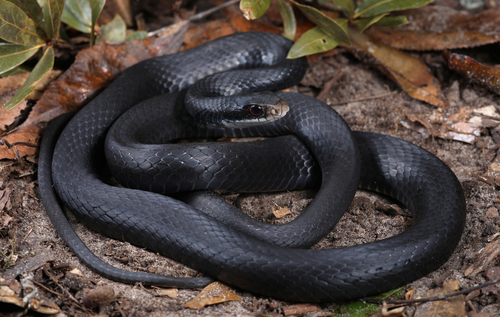
7 reptile species are confirmed: Common Watersnake, Common Snapping Turtle, Painted Turtle, Eastern Milksnake, DeKay's Brownsnake, Common Garter Snake, and Central Ratsnake. Recent turtle and garter snake records show that ordinary pond-edge and trail encounters still add useful seasonal evidence. Warm days favor slow basking checks, pond-edge turtle scans, and careful cover-object work for small secretive snakes.
Yet to Find
Herp Gap List
Species recorded within ~50 miles but not yet documented here. For herps, regional frequency matters less than timing: rainy migration nights, spring chorus windows, cover objects, basking logs, and stream-rock checks decide what appears.
Amphibians
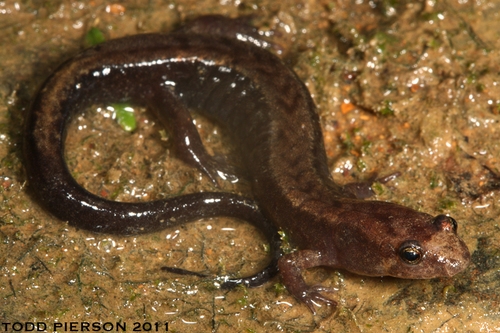
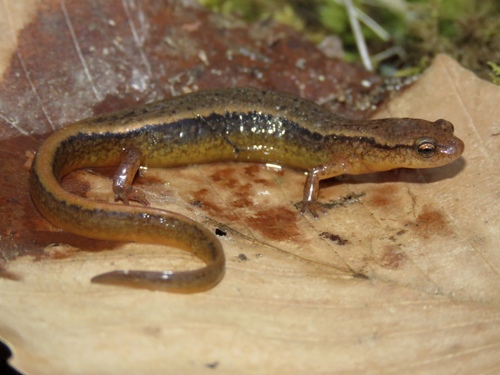
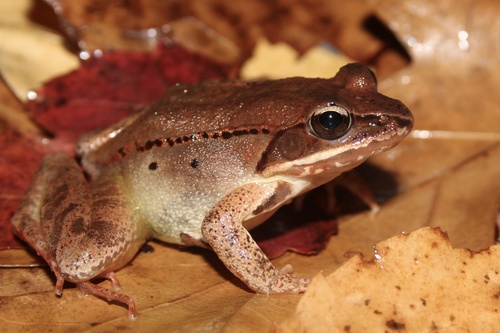
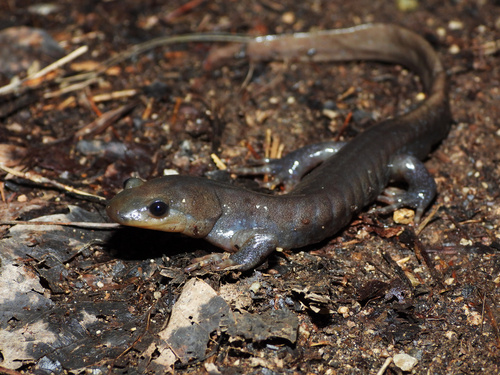
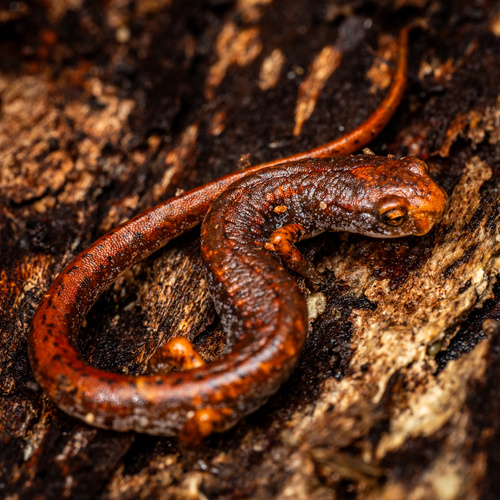
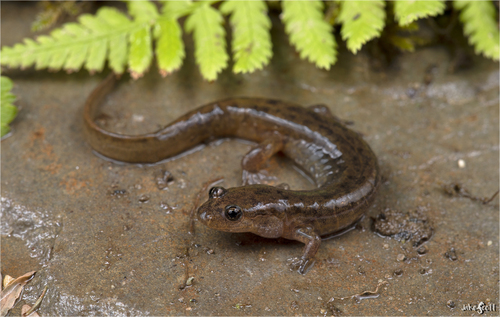
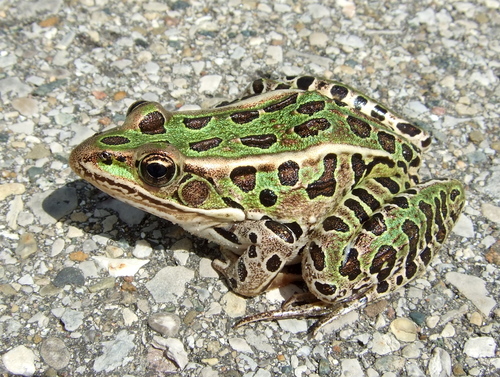
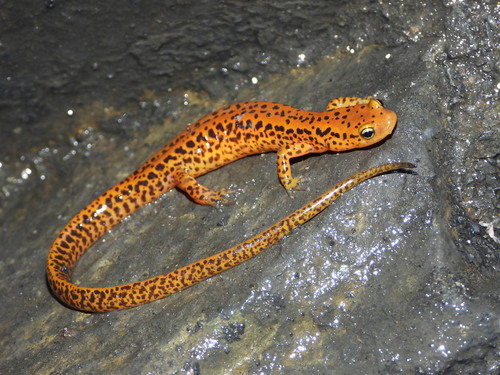
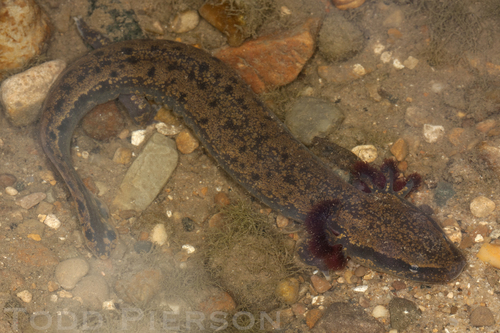
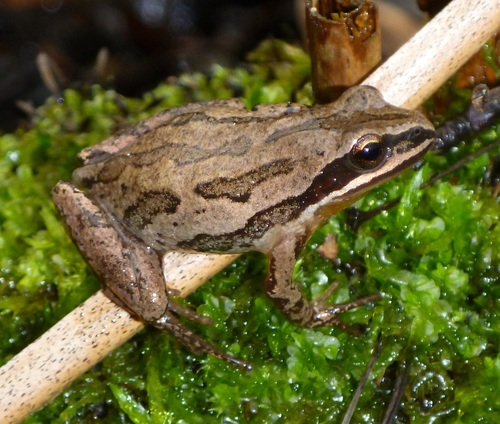
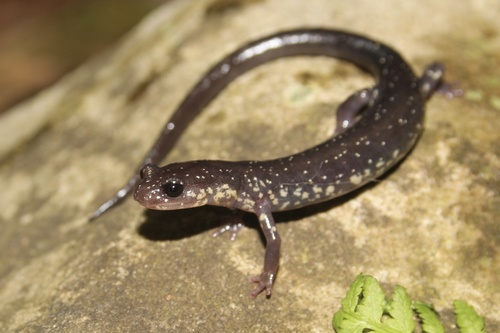
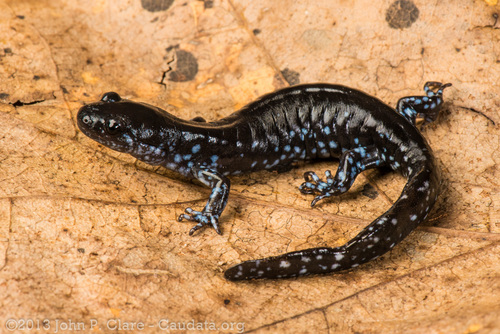
11 of 23 amphibian species recorded within ~50 miles have turned up here. The 12 species below are vetted local-fauna candidates documented in the surrounding region but not yet here — ranked by how common they are nearby. Captive-only, transported, and exotic-pet taxa are excluded.
Reptiles
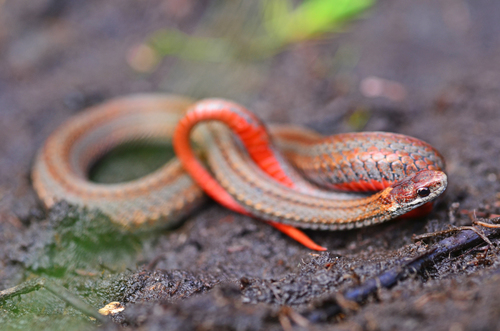
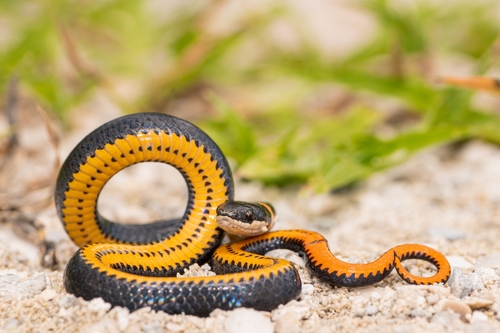
7 of 15 reptile species recorded within ~50 miles have turned up here. The 8 species below are vetted local-fauna candidates documented in the surrounding region but not yet here — ranked by how common they are nearby. Captive-only, transported, and exotic-pet taxa are excluded.
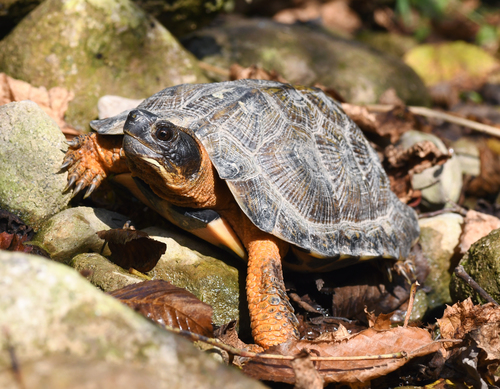
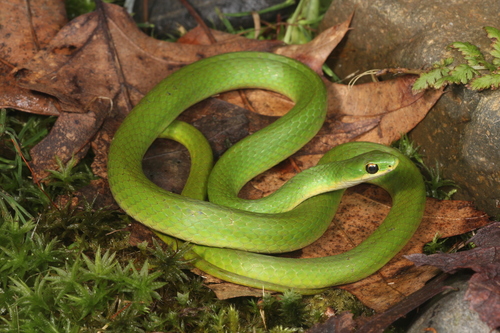
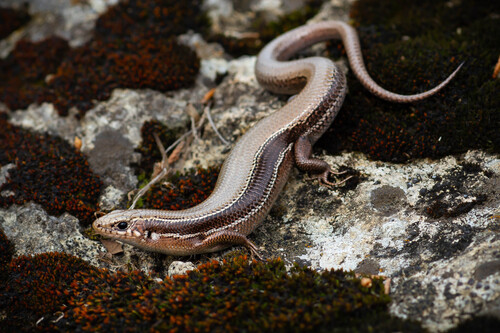

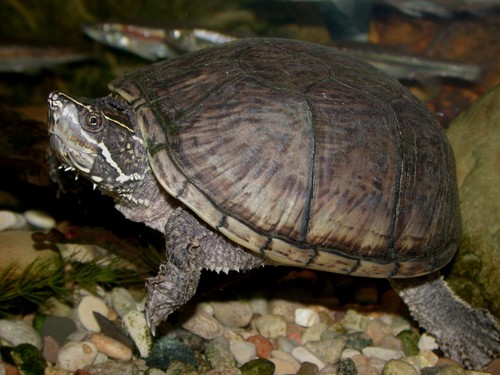
Find More
How to Find More
Most herp records here are incidental. Targeted audio, egg-mass, stream, cover-object, and basking surveys are how the list grows. Replace cover exactly as found and treat sensitive locations carefully.
Stream rock-flip
Riffle and run sections of Michigan Creek; turn flat partly-submerged rocks and cobble at the wetted edge, plus rocks in the seepage zones feeding the creek.
April–June on cool days, water 45–60°F; daytime is fine since salamanders shelter under rocks. Replace every rock exactly as found.
Northern Two-lined, Dusky and Allegheny Mountain Dusky salamanders — the single largest gap on the property.
Cold seep search
Cold, clean spring runs and seeps on the mesic slope where groundwater emerges; flip flat rocks and probe gravel in the spring head.
April–June daytime when seep water is cold (under ~55°F); also active on warm rainy nights.
A photo-vouchered Spring Salamander record, plus larval Eurycea. Photograph the animal, microhabitat, and shelter rock, then replace the rock exactly as found.
Vernal-pool night walk
Floodplain depressions and woodland vernal pools off the creek; headlamp the pool edges and the forest-floor migration approach.
The first warm rainy nights of spring, March into early April, air above 45°F, 9 PM–midnight.
Jefferson's and Blue-spotted salamander complex — breeding adults migrating to the pools.
Egg-mass search
The same fishless vernal and floodplain pools; inspect submerged sticks and vegetation for attached masses.
Mid-March to mid-April daytime, shortly after the salamander migration nights.
Confirms the Jefferson/Blue-spotted complex by jelly color and attachment, distinct from the recorded Spotted Salamander.
Night chorus survey
The creek margin, floodplain wet areas, and any standing water or seeps; stop and listen at several stations.
Warm wet evenings, 9–11 PM; American Toad trills late April–May, leopard frog snore-calls in early-spring meltwater.
Northern Leopard Frog and any unrecorded breeding choruses in the floodplain pools.
Pool rock-flip / snorkel
Deeper, slow pools of the creek; lift large submerged flat rocks and woody debris, or snorkel the pool bottoms.
Night work in spring and fall when the water is cold; mudpuppies are nocturnal and active in cool water.
Mudpuppy — fully aquatic, found only by working large rocks in the deeper pools.